

Choosing a Conversion Van: Understanding AWD, 4WD, and RWD
Conversion Van Buyer Guide
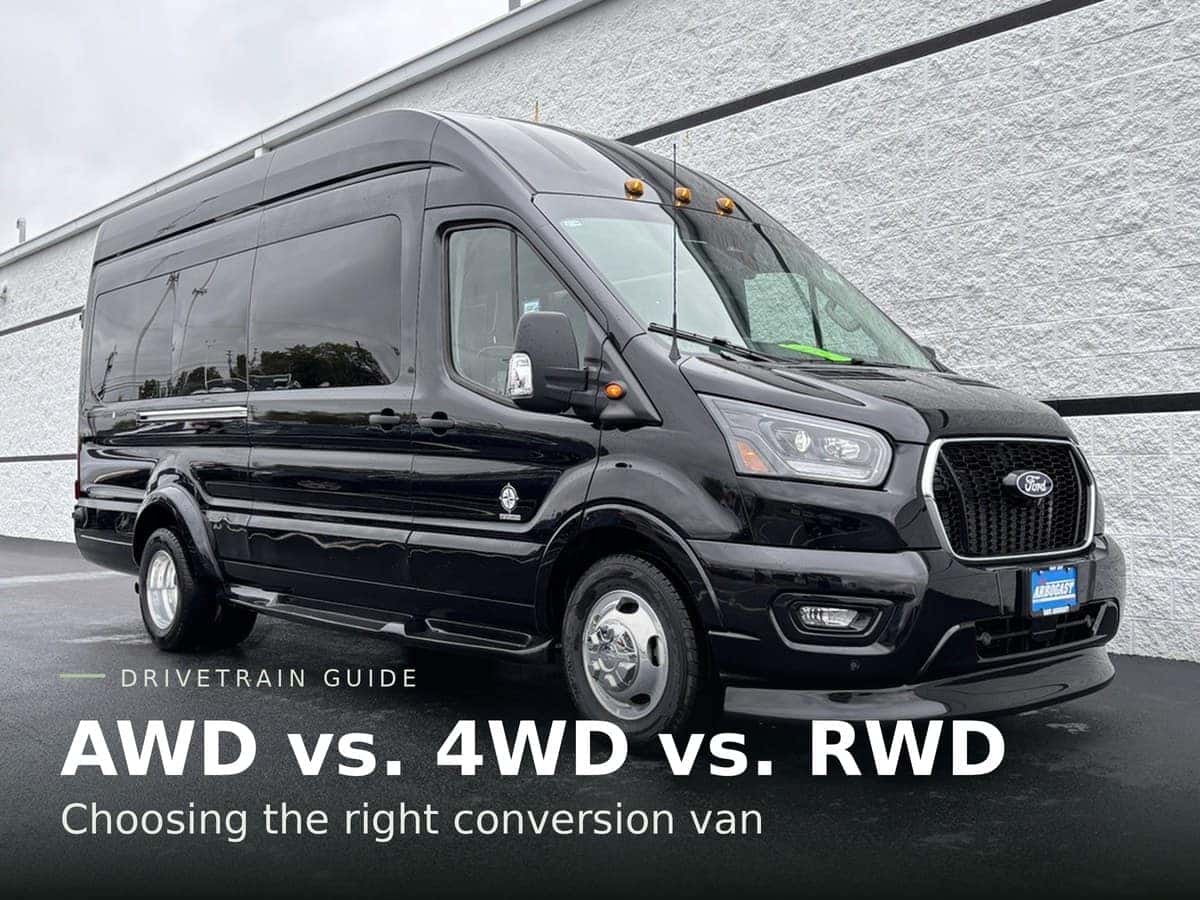
When shopping for a conversion van, the drivetrain can be just as important as passenger seating, interior features, and roof height. All-wheel drive (AWD), four-wheel drive (4WD), and rear-wheel drive (RWD) affect how a van puts power to the road, how it responds in challenging conditions, and which driving environments it is best suited for.
The right choice depends on where you drive and how you plan to use your van. A family that regularly travels through snow-covered roads may prioritize a different drivetrain than someone who primarily drives on highways and around town. Understanding the differences can help you narrow your choices before comparing specific conversion van models.
The Quick Answer
- AWD: A system designed to distribute power to all four wheels automatically or as needed, depending on its design. It can be a practical choice for drivers who encounter changing road conditions.
- 4WD: A system that can engage power to both axles, often with selectable driving modes. Certain systems offer high- and low-range settings for different conditions.
- RWD: A drivetrain that sends engine power to the rear wheels. It is common in full-size conversion vans and can be a good fit for everyday driving, highway travel, and buyers who do not regularly need additional driven-wheel traction.
EXPLORE AWD AND 4WD CONVERSION VANS
What Is the Difference Between AWD, 4WD, and RWD?
The biggest difference is how each drivetrain sends engine power to the wheels. That distinction affects available traction, how the vehicle responds to slippery surfaces, and the type of driving for which the system is designed.
All-Wheel Drive (AWD)
All-wheel drive systems are designed to provide power to all four wheels. Depending on the vehicle, the system may continuously manage power distribution or engage additional traction when it detects changing driving conditions.
For conversion van shoppers, AWD can be appealing when regular travel includes rain, snow, wet pavement, or changing road surfaces. The system can help the vehicle maintain traction when accelerating, particularly when one axle has less grip than the other.
AWD does not make a van immune to slippery conditions. Tires, road conditions, vehicle speed, and driver input still matter. It also does not automatically shorten stopping distances.
Four-Wheel Drive (4WD)
Four-wheel drive systems are designed to send power to both the front and rear axles. Many traditional 4WD systems allow the driver to select different operating modes, such as two-wheel drive, four-wheel-drive high range, and four-wheel-drive low range.
Those selectable modes can make 4WD useful in conditions where additional traction or controlled low-speed movement is important. Depending on the system, this may include snow-covered roads, loose surfaces, or certain off-pavement situations.
Not every 4WD system operates the same way. The available modes, engagement process, and intended use depend on the specific vehicle and conversion. Drivers should understand the owner’s manual instructions before using a particular mode, especially on dry pavement.
Explorer has offered four-wheel-drive conversion vans based on GMC Savana and Chevrolet Express platforms. One example is covered in our Explorer 4×4 conversion van review, which discusses a specific GMC-based vehicle and its selectable 4×4 system.
Rear-Wheel Drive (RWD)
Rear-wheel drive sends engine power to the rear wheels while the front wheels handle steering. It is a familiar configuration in many full-size vans, including GMC Savana and Chevrolet Express conversion vans.
RWD can be a sensible choice for shoppers who primarily drive on paved roads, highways, and familiar routes. It is also important to remember that a rear-wheel-drive conversion van can still be driven in winter weather when properly equipped with appropriate tires and operated carefully.
However, RWD does not provide the same driven-wheel arrangement as AWD or 4WD. In slippery conditions, available traction can be more limited, particularly when accelerating from a stop or climbing a slick incline.
Which Drivetrain Is Better for Winter Driving?
If winter driving is a major part of your routine, AWD or 4WD may deserve a closer look. Both can provide additional traction compared with a conventional RWD setup, but they accomplish this in different ways.
AWD is often attractive for drivers who encounter changing road conditions throughout the day and prefer a system that manages power distribution without requiring frequent driver input. A properly equipped 4WD van may be appealing to someone who values selectable operating modes for specific conditions.
There are a few important points to remember:
- AWD and 4WD can help with acceleration and maintaining traction, but neither guarantees control on ice or snow.
- Winter tires can make a significant difference in cold-weather traction.
- All vehicles still need adequate stopping distance on slippery roads.
- Driving speed, following distance, tire condition, and road conditions remain important regardless of drivetrain.
AWD vs. 4WD vs. RWD: How Do They Compare?
| Consideration | AWD | 4WD | RWD |
|---|---|---|---|
| Power delivery | All four wheels | Front and rear axles when engaged | Rear wheels |
| Driver input | Often automatic | May have selectable modes | Conventional operation |
| Slippery roads | Additional traction capability | Additional traction when engaged appropriately | Depends heavily on tires and conditions |
| Best suited to | Changing road conditions | Conditions where selectable 4WD modes are useful | Everyday paved-road driving |
This is a general comparison, not a specification for every conversion van. The actual capabilities depend on the chassis, drivetrain design, tires, and equipment installed on the individual vehicle.
Does AWD or 4WD Affect Fuel Economy?
It can. AWD and 4WD systems may add weight and mechanical complexity compared with a two-wheel-drive configuration. Those differences can affect fuel consumption, but the actual result varies by vehicle, engine, transmission, tires, gearing, and driving conditions.
Conversion vans are also larger and heavier than many passenger vehicles, so drivetrain choice is only one part of the fuel-economy picture. If fuel costs are a major consideration, compare the specifications of the specific vans you are considering rather than assuming every AWD or 4WD model will have the same difference.
Which Drivetrain Should You Choose for Your Conversion Van?
The best choice comes down to your typical routes, climate, and driving priorities.
Consider AWD if:
- You regularly encounter rain, snow, or changing road conditions.
- You prefer a system that manages power distribution automatically.
- You want to explore Ford Transit-based conversion van configurations that offer AWD.
Consider 4WD if:
- You value selectable four-wheel-drive operating modes.
- Your driving sometimes includes challenging surfaces or conditions where the specific 4WD system is designed to help.
- You are considering a GMC Savana or Chevrolet Express conversion equipped with a 4WD conversion system.
Consider RWD if:
- Most of your driving takes place on paved roads and highways.
- You do not regularly encounter conditions that call for AWD or 4WD.
- You find a conversion van with the seating, interior layout, and equipment that fit your needs.
It is also worth comparing the van itself beyond its drivetrain. Passenger capacity, captain’s chairs, rear sofa-bed configuration, roof height, storage, and entertainment features can all have a meaningful effect on how comfortable the vehicle is for your family or travel group.
To explore the available configurations, visit our conversion van models page or learn more about Explorer Conversion Vans.
Find the Right Conversion Van for Your Driving Needs
There is no single drivetrain that is right for every conversion van shopper. AWD may be a strong fit for drivers who regularly encounter changing road conditions, 4WD can offer selectable capability in the right applications, and RWD remains a practical configuration for many everyday driving situations.
The most useful next step is to compare actual vehicles and understand the drivetrain and equipment on each one. At Dave Arbogast Conversion Vans, shoppers can explore a range of new and used conversion vans and get help comparing available configurations.
If you are shopping from outside Ohio, our team also works with buyers nationwide. Contact our conversion van specialists through our contact page to discuss what you are looking for and which options may fit your driving needs.
Frequently Asked Questions
Is AWD better than 4WD for a conversion van?
Neither is automatically better. AWD is often designed to manage power distribution automatically, while many 4WD systems provide selectable modes. The better choice depends on the specific system and the driving conditions you encounter.
Is rear-wheel drive good in snow?
A rear-wheel-drive conversion van can be driven in winter conditions with appropriate tires and careful driving. However, AWD or 4WD may provide additional traction when accelerating on slippery surfaces. No drivetrain eliminates the need to adjust speed and driving distance for conditions.
Does AWD or 4WD help a van stop faster?
No. AWD and 4WD primarily affect how engine power is delivered to the wheels. They do not automatically shorten braking distances. Tires, road conditions, vehicle speed, and braking systems all influence how quickly a van can stop.
Are Ford Transit Explorer conversion vans available with AWD?
Yes. Explorer offers Ford Transit-based conversion van configurations with AWD. Equipment and availability vary by model and vehicle, so shoppers should verify the drivetrain on the specific van they are considering.
Can you get a GMC Savana or Chevrolet Express conversion van with 4WD?
Explorer has offered GMC Savana and Chevrolet Express conversion vans equipped with 4WD conversion systems. These are specific configurations, not standard equipment on every Savana or Express conversion van. Check the individual vehicle details to confirm its drivetrain and operating modes.

0 comment(s) so far on Choosing a Conversion Van: Understanding AWD, 4WD, and RWD