


Choosing the Perfect Conversion Van
Conversion Van Buyer Guide
Choosing the right conversion van means looking beyond its exterior styling. Roof height, passenger capacity, seating layout, storage, and the places you plan to drive and park all influence how well a van fits your life. For many shoppers, one of the most important decisions is whether to choose a high-top or low-top configuration.
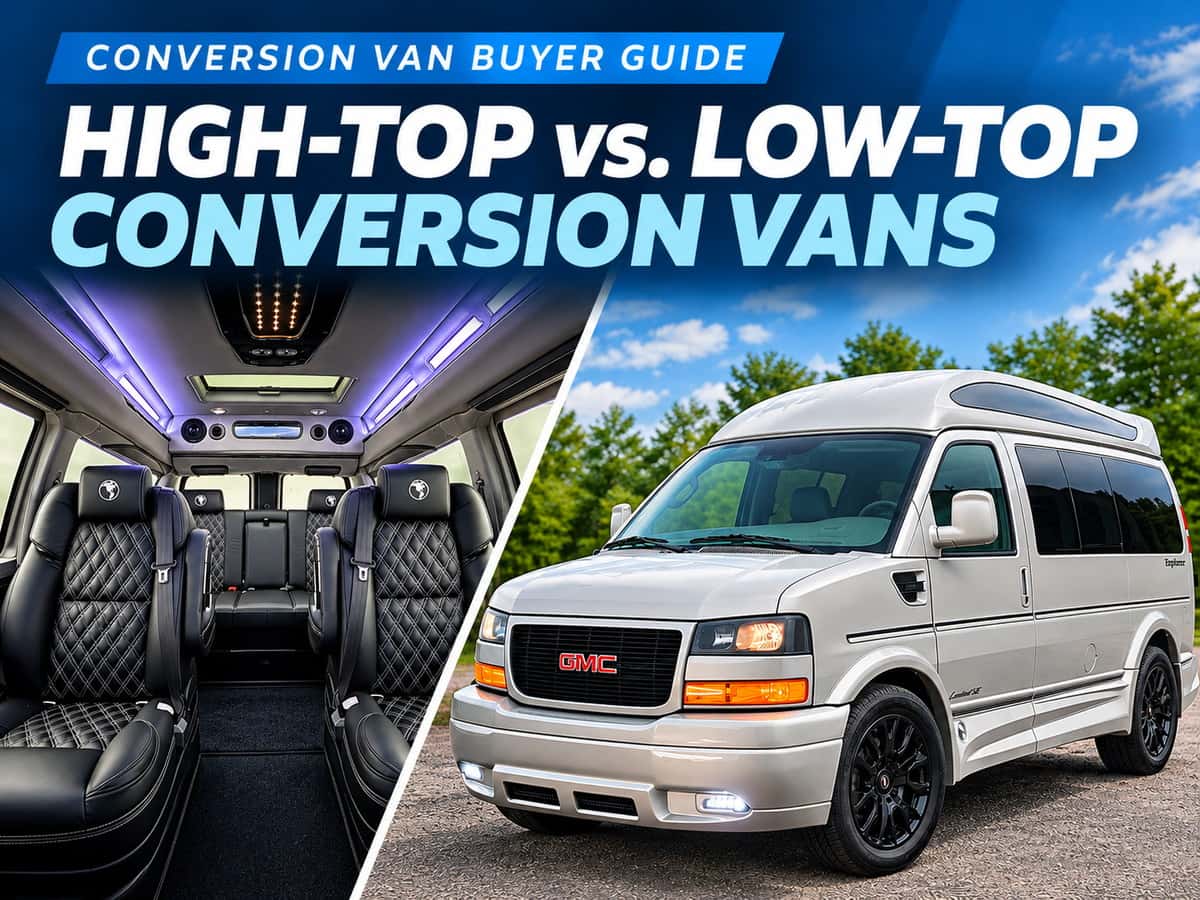
Quick Answer: Start With How You Will Use the Van
A high-top conversion van may be the better fit if you value a more open cabin and additional interior headroom. A low-top van may suit drivers who prefer a lower overall vehicle profile or need to work around height-restricted parking. The right choice depends on the exact vehicle, its conversion, your passengers, and your everyday driving environment.
High-Top vs. Low-Top Conversion Vans
The main difference is the roof profile. A high-top conversion van has a raised roof designed to provide additional interior height, while a low-top configuration maintains a lower overall profile. The exact dimensions, cabin space, and available equipment vary by chassis, model, and conversion package.
| What Matters | High-Top Van | Low-Top Van |
|---|---|---|
| Interior Headroom | Additional headroom may create a more open-feeling cabin. | Less interior height than a comparable raised-roof configuration. |
| Parking Clearance | Requires careful attention to total vehicle height. | May fit more height-restricted spaces, depending on actual dimensions. |
| Travel Comfort | Can feel more spacious, particularly when moving around the cabin. | Can be a good fit when a lower profile better suits your routine. |
| Best Deciding Factor | Cabin space and your preferred interior experience. | Vehicle clearance and your preferred exterior profile. |
Neither roof style automatically guarantees a particular seating arrangement, entertainment package, or cargo capacity. Always review the individual vehicle listing to confirm its actual equipment and dimensions.
When a High-Top Conversion Van Makes Sense
A high-top conversion van is worth considering if interior openness is a major priority. Additional headroom can make the cabin feel less confined, especially during long drives when passengers spend several hours together.
Families, frequent road-trip travelers, and buyers who appreciate a more spacious-feeling interior may prefer this configuration. Depending on the specific conversion package, a raised roof may also accommodate certain interior features or layouts. Those features are not universal, so check the equipment on the exact van you are considering.
The main trade-off is exterior height. Before choosing a high-top model, consider your garage, workplace parking, covered parking structures, and other places you regularly visit. A van that works beautifully on the highway still needs to fit your everyday environment.
When a Low-Top Conversion Van Makes Sense
A low-top conversion van may be a better fit if you prefer a lower vehicle profile or regularly encounter height restrictions. It can be particularly appealing when the van must work within an established routine that includes a garage, parking structure, or other clearance-sensitive location.
That does not mean a low-top van cannot provide a comfortable travel experience. Seating, upholstery, rear climate control, entertainment equipment, and other amenities depend on the individual conversion. A well-equipped low-top model may suit your needs better than a high-top van if its layout and dimensions are a better match.
Measure your available parking space and compare it with the manufacturer’s or seller’s confirmed vehicle height. Do not assume that all low-top vans share the same dimensions or will fit every residential garage.
How to Choose the Right Conversion Van for Your Family
Roof height is only one part of the buying decision. The best conversion van is the one that accommodates your passengers, belongings, and travel habits without creating unnecessary compromises.
1. Choose the Seating Capacity You Actually Need
Think about how many people usually travel together, not just how many you might carry once or twice a year. A seven-passenger layout may suit a smaller group, while a nine-passenger configuration may be more practical for larger families or frequent group travel. Confirm the exact seating capacity and layout of each vehicle.
2. Consider Luggage and Everyday Cargo
Sports equipment, strollers, suitcases, coolers, and other travel essentials can take up meaningful space. Look at how the available seating and storage work together, and consider whether your belongings will fit comfortably without obstructing passenger access.
3. Compare the Interior Features
Review the actual seating, rear entertainment, climate-control equipment, charging options, lighting, and any available sofa-bed configuration. Two conversion vans with similar exterior profiles can have noticeably different interiors and equipment.
4. Think About Where You Drive and Park
Consider highway travel, urban parking, residential garages, hotel parking, and the destinations you visit most often. If a particular clearance restriction could prevent you from using a parking location, verify the vehicle’s actual height before making a decision.
5. Compare the Exact Vehicles, Not Just the Roof Styles
The chassis, model year, conversion company, mileage, condition, seating arrangement, and installed features all matter. When comparing two vans, evaluate their complete specifications and condition rather than assuming roof height alone determines value or comfort.
A Practical Conversion Van Clearance Checklist
Before buying a van, work through these checks:
- Measure your garage opening and the available interior height.
- Check posted clearance limits at parking structures and other regular destinations.
- Confirm the exact overall vehicle height, including the raised roof and any relevant exterior equipment.
- Allow for a safe margin rather than choosing a vehicle that barely fits on paper.
- Review seating, luggage space, and passenger access in person or through detailed vehicle photos and a walkaround.
- Ask for clarification when a listing does not provide the dimensions or equipment you need.
Should You Buy a New or Used Conversion Van?
A new conversion van may appeal to buyers who want to compare current configurations and available equipment. A used conversion van can provide a different combination of age, mileage, features, and price. Neither option is automatically better; the right choice depends on your budget, priorities, and the condition and equipment of the specific vehicle.
As you compare options, explore our new conversion van inventory and used conversion vans for sale.

0 comment(s) so far on Choosing the Perfect Conversion Van