


Conversion Vans vs. SUVs
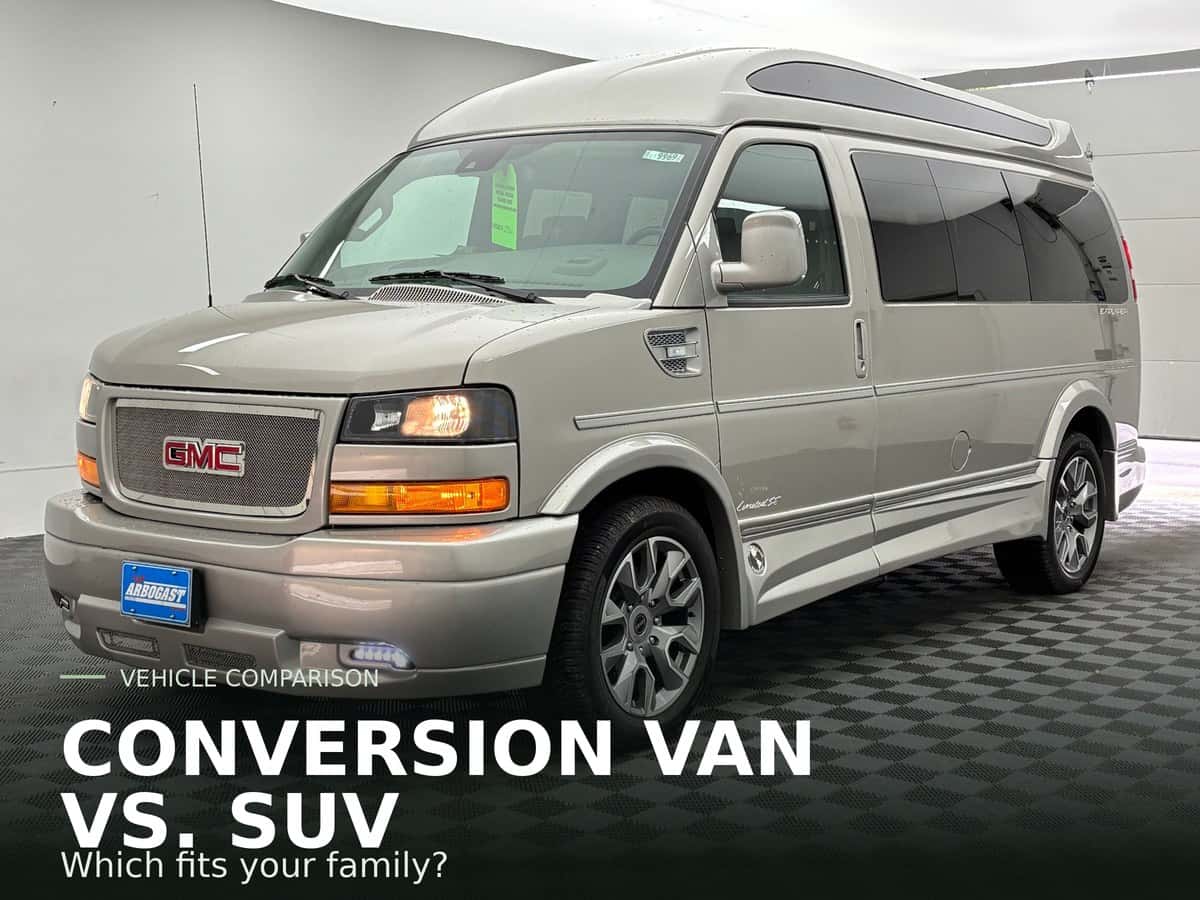
Choosing between a conversion van and an SUV comes down to how you travel, how many people regularly ride with you, and how much room everyone needs. An SUV can be a practical choice for everyday driving, but a conversion van deserves a closer look when family road trips, passenger comfort, and flexible seating are priorities.
For families who regularly travel with children, relatives, teammates, or extra luggage, the difference is more than the number of seats. Cabin space, access to the rear rows, and the comfort of passengers throughout the vehicle can make a meaningful difference on longer drives.
Conversion Van vs. SUV: The Main Differences
The biggest distinction is how each vehicle uses its interior. SUVs come in a wide range of sizes and are often well suited to commuting, errands, and smaller groups. Full-size conversion vans emphasize passenger room and a more spacious rear cabin, with upgraded seating and comfort features that vary by vehicle and conversion package.
| What matters | Conversion van | SUV |
|---|---|---|
| Passenger room | A roomy cabin designed around passenger travel | Varies considerably by size and seating layout |
| Seating | Multiple configurations, depending on the vehicle | Two- or three-row layouts, depending on the model |
| Passenger access | A wide side-door opening can help passengers reach rear seating | Access to the third row depends on the model and seat design |
| Travel comfort | Available upgraded seating and rear-cabin amenities | Comfort and amenities vary by trim and row |
| Everyday use | Best considered when passenger space is a frequent priority | Often convenient for commuting, errands, and varied driving needs |
| Parking and maneuvering | Exterior size and roof height require attention | Depends on the SUV’s dimensions and configuration |
Passenger Space and Seating Flexibility
Passenger capacity is only part of the equation. Buyers should also consider how easy it is to reach each seat, how much room passengers have around them, and whether the seating arrangement works for the people who will use the vehicle most often.
Many conversion vans are configured with individual captain’s chairs and a rear bench, although layouts differ. Some models offer seven- or nine-passenger arrangements, while other configurations accommodate different group sizes. Always confirm the seating capacity and layout of the specific vehicle before buying.
An SUV can work well for a household that usually carries a few passengers. However, when the third row is frequently occupied or adults regularly travel in the rear, it is worth comparing the actual space and access in both vehicle types rather than relying on advertised seat counts alone.
Which Is More Comfortable for Family Road Trips?
Long-distance comfort depends on more than the driver’s seat. Consider how the entire group will feel after several hours on the road, including passengers sitting in the back.
A conversion van may offer features such as upgraded captain’s chairs, rear entertainment, additional climate controls, privacy shades, or other cabin amenities, depending on its conversion package. These details can make a difference on family vacations, tournament weekends, and trips that involve several hours between stops.
Some SUVs also offer premium rear seating and advanced entertainment features. The useful comparison is between the specific vehicles you are considering: sit in each row, check available legroom, and see whether passengers can settle in comfortably for the length of your typical trip.
Luggage, Sports Gear, and Everyday Cargo
Families rarely travel with passengers alone. Strollers, suitcases, coolers, sports equipment, and shopping bags all compete for space.
A conversion van’s larger cabin can provide useful flexibility, but available cargo room depends on its seating arrangement and how much space passengers occupy. An SUV’s cargo area can also change substantially when its rear seats fold, and some larger SUVs offer generous storage capacity.
Before deciding, consider your most common trip. If you regularly carry a full group and their belongings at the same time, inspect the cargo space with every seat in the position you expect to use. If you usually travel with only a few people and need a flexible cargo area, an SUV may fit your routine well.
Daily Driving, Parking, and Convenience
A conversion van’s passenger space comes with practical considerations. Its overall length, turning characteristics, roof height, and visibility may feel different from those of a family SUV. Parking garages, drive-throughs, narrow parking spaces, and tight residential streets should all be part of the test drive.
An SUV may be easier to fit into your daily routine if you frequently park in confined areas or mostly carry one or two passengers. On the other hand, families who routinely travel together may find the extra cabin space of a conversion van worth adapting to.
Test drive the vehicle on roads similar to the ones you use every day. Check the mirrors, camera systems, passenger entry, and parking visibility rather than assuming that either vehicle type will feel right immediately.
What About Fuel, Ownership Costs, and Budget?
There is no single cost comparison that applies to every conversion van and SUV. Purchase price, engine, vehicle weight, fuel economy, insurance, maintenance, tires, and annual mileage all influence the cost of ownership.
Compare the actual vehicles you are considering and use their published specifications. If you plan to drive long distances frequently, estimate fuel expenses using your expected annual mileage and the fuel-economy figures for each specific vehicle. Ask your insurer for quotes and consider the maintenance needs of the individual model and conversion.
It is also worth comparing new and used conversion vans. A pre-owned van may offer a different combination of age, mileage, equipment, and price than a new one, so review the vehicle’s condition and history carefully.
When a Conversion Van Makes More Sense
A conversion van deserves a serious look if your routine includes several of these needs:
- You regularly travel with a larger family or group.
- You take long road trips and want passengers to have room to relax.
- You want individual seating rather than having everyone share a conventional bench arrangement.
- You often carry both passengers and luggage or sports equipment.
- You value available rear-cabin amenities and a more passenger-focused interior.
If these priorities sound familiar, explore the available GMC conversion vans and compare their layouts and equipment.
When an SUV May Be the Better Choice
An SUV may be the more practical fit if you generally carry fewer passengers, need a vehicle that fits easily into tight parking spaces, or prefer a more conventional daily-driving footprint. Buyers who use the rear seats occasionally may not need the extra passenger-focused space of a conversion van.
The right choice is the one that fits your actual routine. Think about how often every seat is occupied, how much cargo you carry, and whether your priority is daily flexibility or room for people to travel together comfortably.
How to Compare Conversion Vans Before You Buy
When you evaluate a conversion van, look beyond the exterior and check the details that will shape your ownership experience:
- Confirm the passenger capacity and inspect the seating layout.
- Check the comfort and access of every row.
- Review which entertainment, climate, storage, and convenience features are actually installed.
- Measure your typical cargo needs with the seats in use.
- Check exterior height and length against your parking and garage requirements.
- For a used vehicle, review its history, condition, maintenance records, and conversion equipment.
Dave Arbogast Conversion Vans serves shoppers beyond the local area, so you can compare available vehicles and ask questions before deciding whether to visit or arrange a purchase from farther away.
Frequently Asked Questions
Is a conversion van better than an SUV for a large family?
It can be, particularly when several passengers regularly travel together and rear-cabin space is a priority. The best option depends on the specific seating layout, passenger capacity, cargo needs, and driving routine.
Do conversion vans have more passenger space than SUVs?
Full-size conversion vans generally provide a larger passenger cabin than many SUVs, but dimensions and seating vary. Compare the specific vehicles and inspect every row before making a decision.
Are conversion vans comfortable for long road trips?
They can be a strong option for long trips because many offer spacious seating and available rear-cabin amenities. Comfort depends on the vehicle, conversion package, seating arrangement, and passenger preferences.
Can a conversion van work as an everyday family vehicle?
Yes, if its size and parking requirements fit your routine. Consider your usual routes, garage clearance, passenger needs, and how often you carry a full group before choosing one for daily use.
Should I buy a new or used conversion van?
That depends on your budget, desired equipment, and preferences about vehicle age and mileage. Compare the condition, history, features, and total ownership costs of each vehicle rather than choosing by model year alone.
Find the Right Vehicle for Your Family
An SUV may be the right fit for everyday flexibility, while a conversion van can be especially appealing when passenger comfort and room for the whole group matter most. The most useful comparison is based on how you travel—not just how many seats a vehicle advertises.

0 comment(s) so far on Conversion Vans vs. SUVs