


Ford Transit vs. GMC Savana Conversion Van: Which Is Right for You?
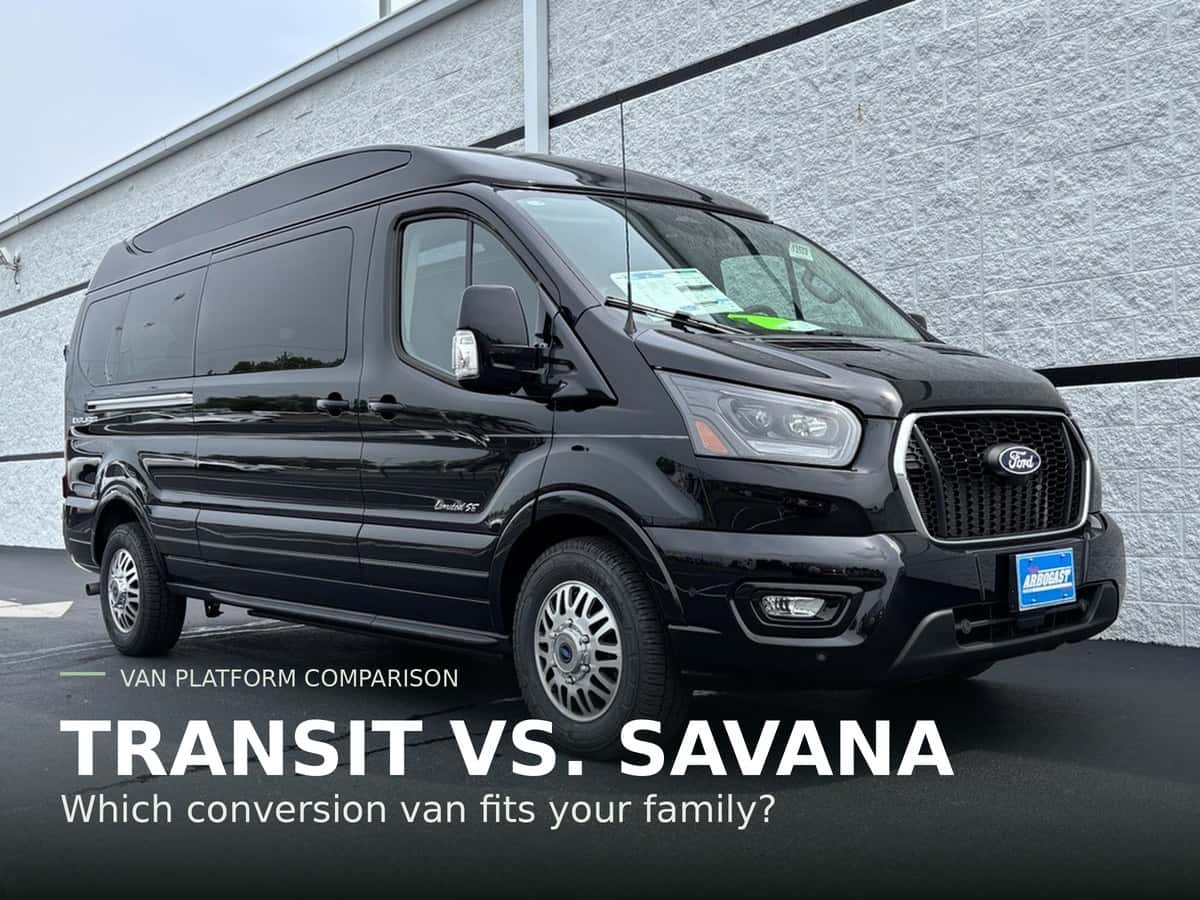
CONVERSION VAN BUYER GUIDE
Choosing between a Ford Transit and a GMC Savana conversion van comes down to more than the badge on the front. Both can provide comfortable seating, useful passenger space, and a more accommodating travel experience than many traditional family vehicles. The bigger differences are the underlying van design, available configurations, driving experience, and the conversion package built around each platform.
For families planning long road trips, sports weekends, vacations, or everyday transportation, the best choice is the van that fits the people, places, and equipment you carry most often. Comparing the actual vehicles side by side is the most reliable way to decide.
Quick Answer
A Ford Transit conversion van is worth a close look if you value its modern van design, available configurations, and the possibility of features such as all-wheel drive on select models. A GMC Savana conversion van appeals to buyers who prefer the traditional full-size van layout and want to focus on the finished conversion, seating arrangement, and available equipment. Neither is automatically the better choice: the specific model year, drivetrain, conversion package, and condition matter.
EXPLORE EXPLORER CONVERSION VANS
Ford Transit vs. GMC Savana: The Main Differences
Both platforms can serve as the foundation for a professionally converted passenger van, but they approach the driving and passenger experience differently. The table below provides a practical starting point. Exact equipment and dimensions depend on the model year and individual vehicle.
| What to Compare | Ford Transit | GMC Savana |
|---|---|---|
| Overall design | Modern full-size van platform with multiple body and roof configurations across model years. | Traditional full-size van platform with a familiar conventional van layout. |
| Driving priorities | Worth testing if visibility, seating position, maneuverability, and available driver-assistance equipment are priorities. | Worth testing if you prefer its traditional driving position and full-size van feel. |
| Drivetrain | Rear-wheel drive and available all-wheel drive depend on the model year and configuration. | Available drivetrains depend on model year and configuration; verify the specific van. |
| Passenger comfort | Depends on the conversion floorplan, seating, roof, and selected amenities. | Depends on the conversion floorplan, seating, roof, and selected amenities. |
| Best way to choose | Compare the exact configuration and equipment with your travel needs. | Compare the exact configuration and equipment with your travel needs. |
What Makes a Ford Transit Conversion Van Worth Considering?
The Ford Transit offers a modern full-size van platform with a range of configurations. For conversion-van shoppers, those choices can affect everything from how the vehicle fits in a garage to how passengers move through the cabin.
Configuration and Everyday Usability
Transit models have been offered with different roof heights, body lengths, and drivetrains. The right combination depends on the particular model year and conversion. A shopper who needs additional headroom or passenger space should compare the finished vehicle’s dimensions rather than assuming every Transit offers the same interior.
Driver Technology and Available All-Wheel Drive
Depending on the year and equipment, a Transit may offer driver-assistance technology and all-wheel drive. These options can matter to families who travel in changing weather or spend time on unfamiliar roads. Verify the specific vehicle’s equipment list before treating any feature as included.
If the Transit is your leading candidate, browse the available new Ford Transit conversion vans and compare the actual floorplans, equipment, and specifications.
Why Choose a GMC Savana Conversion Van?
The GMC Savana is a long-established full-size van platform used for passenger transportation and professional conversions. Buyers who prefer a traditional van layout may find it a natural fit, particularly when a finished conversion offers the seating arrangement and amenities they want.
Focus on the Finished Conversion
With a Savana-based conversion, the final passenger experience depends heavily on the builder’s package and the individual van. Captain’s chairs, rear sofa beds, entertainment systems, trim, lighting, and rear climate features may vary. Check the vehicle’s actual equipment rather than assuming every conversion includes the same upgrades.
A Familiar Full-Size Van Feel
Some shoppers prefer the Savana’s conventional full-size van design and established platform. A test drive is the best way to evaluate visibility, steering feel, parking comfort, and how confident you feel behind the wheel. Consider your usual driving environment, including parking areas, garages, and narrow streets.
Compare the available new GMC conversion vans to see which configurations and equipment are currently offered.
Which Platform Is Better for Family Road Trips?
For family travel, the conversion interior can matter more than the name of the chassis. The Ford Transit and GMC Savana can both serve as the foundation for a comfortable passenger-focused conversion, but the finished layouts are not interchangeable.
Compare these details before choosing:
- Passenger seating: Confirm the actual seating capacity and make sure the layout works for the people who regularly travel with you.
- Seat comfort: Sit in the front and rear passenger seats. Look at support, access, legroom, and how easy it is for children or older passengers to get in and out.
- Luggage space: Consider how much room remains for bags, sports equipment, strollers, or other items when every passenger is on board.
- Rear climate comfort: Check the actual rear heating and air-conditioning equipment, controls, and airflow.
- Entertainment and power: Verify which screens, audio equipment, USB ports, and power outlets are included.
- Roof and overall height: Compare the completed van’s height with your garage, parking structures, and frequently visited destinations.
A seven-passenger layout may suit a family that values individual seating and space between passengers. A nine-passenger layout may be more practical when you regularly travel with a larger group. The best choice depends on the specific interior and how much luggage you carry.
Fuel Economy, Drivetrain, and Ownership Costs
Fuel economy should be evaluated using the specific model year, engine, drivetrain, body configuration, and conversion equipment. The weight and shape of the finished van, driving conditions, passenger load, and driving habits can all affect real-world consumption. Avoid assuming one platform will always use less fuel than the other.
The same principle applies to maintenance and ownership costs. Compare service history on used vans, tire condition, mileage, maintenance needs, and the availability of records for both the base vehicle and its conversion equipment. For a new van, review the exact warranty documentation and the coverage that applies to the base vehicle and conversion components.
If you are considering all-wheel drive for winter travel, compare the actual drivetrain and tires on the vehicle. All-wheel drive does not replace appropriate tires, careful driving, or the need to account for road conditions.
How to Choose Between a Ford Transit and GMC Savana
Before making a decision, narrow the search by the features that affect your daily use. This makes it easier to compare vehicles on their merits instead of relying on general claims about one brand or platform.
- Set your passenger requirements. Decide how many people you need to carry regularly and which seating layouts would work.
- Identify must-have features. Decide whether roof height, all-wheel drive, a rear sofa bed, entertainment equipment, or particular seating features are essential.
- Compare exact vehicles. Review the model year, drivetrain, mileage, condition, dimensions, conversion package, and included equipment.
- Test-drive both when possible. Pay attention to visibility, maneuverability, seat comfort, and how each van feels on the roads you use most.
- Compare the total value. Consider asking price, condition, equipment, expected maintenance, and how well the van fits your needs over the years you plan to own it.
You can also review the conversion van model guide for a broader look at the platforms and conversion styles available.
Frequently Asked Questions
Is a Ford Transit or GMC Savana better for a family?
Either can work well when the conversion has the right seating, comfort features, and luggage space. Compare the specific floorplans and test how well each one fits your family’s travel habits.
Do Ford Transit conversion vans offer all-wheel drive?
All-wheel drive is available on certain Transit configurations, but it is not included on every model. Confirm the drivetrain of the specific van you are considering.
Can both platforms be converted into luxury passenger vans?
Yes. Both the Ford Transit and GMC Savana can serve as the base for professionally converted passenger vans. Available interiors and features depend on the conversion company, model year, and individual configuration.
Should I compare the chassis or the conversion package first?
Start with your essential requirements for passenger capacity, driving, and overall dimensions. Then compare the conversion package and equipment on vehicles that meet those needs. The finished van determines much of the comfort and usability you will experience.
The Ford Transit and GMC Savana can both be compelling foundations for a conversion van. Focus on the configuration that suits your passengers, the equipment you will use, and the specific vehicle’s condition rather than assuming one platform is right for everyone.
Explore the available Explorer Conversion Vans to compare current options and find a layout that fits the way you travel.

0 comment(s) so far on Ford Transit vs. GMC Savana Conversion Van: Which Is Right for You?