


How Many Passengers Can a Conversion Van Seat? 7 vs. 9 Passengers
CONVERSION VAN BUYER GUIDE
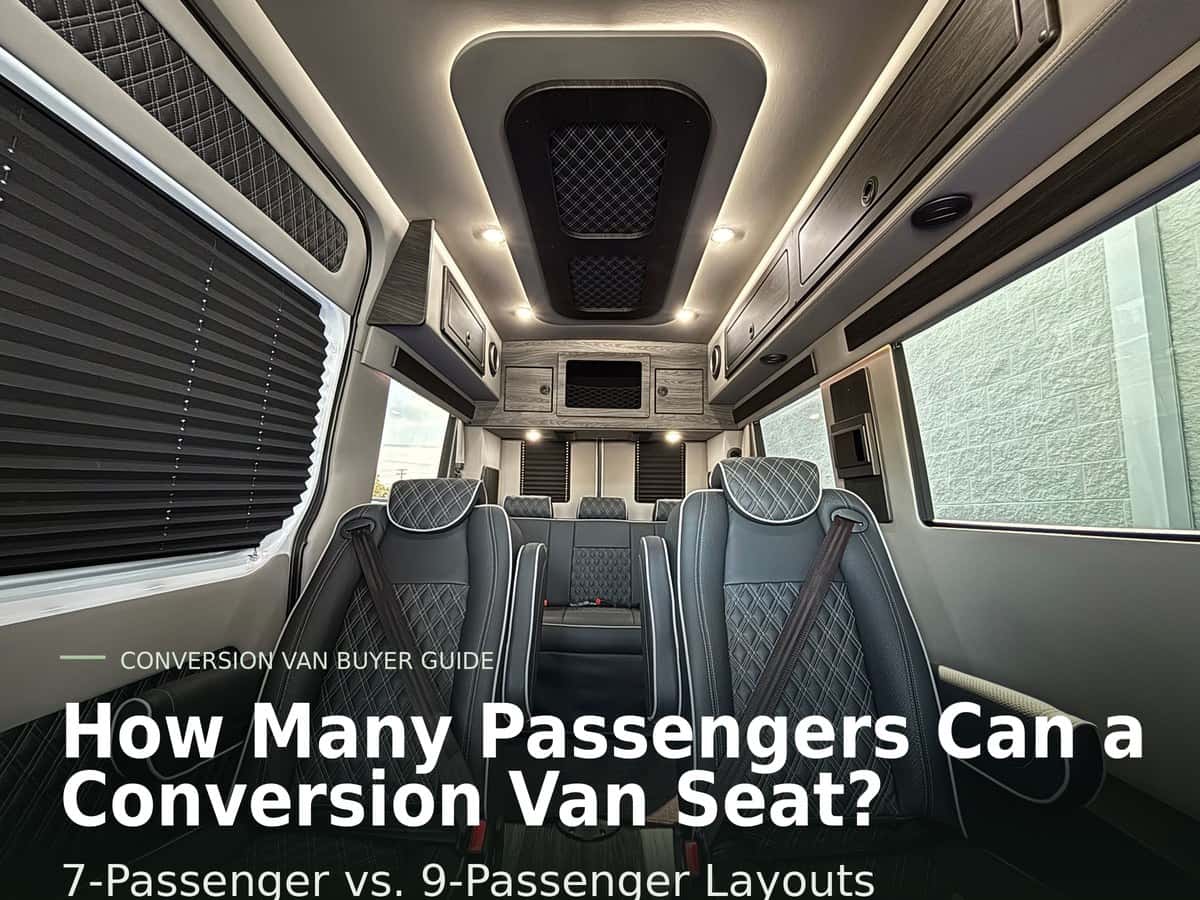
If you are shopping for a conversion van, passenger capacity is one of the first things to consider. A 7-passenger conversion van can offer a different balance of seating and interior flexibility than a 9-passenger layout, so the right choice depends on how many people you regularly carry and how you use the van.
Quick answer
Conversion vans are available in different seating configurations. Dave Arbogast currently offers dedicated inventory for both 7-passenger and 9-passenger conversion vans, while individual vehicles can vary in their chassis, conversion package, interior layout, and equipment.
The important question is not simply, “How many seats can I get?” It is, “How many seats do I actually need?” Choosing the right capacity can affect how you use the interior, how much gear you carry, and how comfortable the van is for your typical trips.
7-Passenger Conversion Vans
A 7-passenger conversion van can make sense for families and groups that want substantial passenger capacity without regularly needing to transport nine people.
For a family that normally travels with five or six people, the additional seating can provide useful flexibility when friends, relatives, or teammates come along. It can also be a practical choice when luggage and personal belongings are an important part of the trip.
The current Dave Arbogast 7-passenger inventory includes conversion vans in different configurations, so shoppers should review the individual vehicle listing for the exact seating arrangement and equipment.
A 7-passenger layout may make sense if you:
- Usually travel with a smaller family or group.
- Want additional seating without regularly carrying nine people.
- Need room for luggage, sports equipment, strollers, or other gear.
- Want a flexible passenger configuration for everyday use and road trips.
You can browse new 7-passenger vans to compare current vehicles and configurations.
9-Passenger Conversion Vans
A 9-passenger conversion van becomes more appealing when carrying a larger group is a regular part of your life. Large families, sports families, extended-family travelers, and groups that frequently travel together may benefit from having additional seating available in one vehicle.
The advantage is flexibility. If you regularly have seven, eight, or nine people traveling together, a 9-passenger configuration can help keep the group together instead of requiring multiple vehicles.
Dave Arbogast maintains dedicated new 9-passenger conversion van inventory. Because conversion vans can differ in their equipment and interior layouts, always verify the seating configuration of the specific vehicle you are considering.
See the current new 9-passenger conversion van inventory to compare available options.
7 vs. 9 Passengers: Which Is Better?
Neither seating capacity is automatically better. The better choice is the configuration that fits the way you actually use the van.
| Consideration | 7-Passenger | 9-Passenger |
|---|---|---|
| Typical use | Families and groups that need flexible seating without regularly carrying nine people. | Larger families and groups that frequently travel together. |
| Passenger capacity | A strong fit when seven seats meet your normal passenger needs. | Useful when carrying a larger group is a regular requirement. |
| Gear and luggage | Can be attractive for buyers balancing passengers with luggage or equipment. | Best suited to buyers who prioritize carrying more people together. |
| Best question to ask | How many people do we realistically carry most often? | Will we regularly need to carry a larger group? |
Passenger Capacity Is Only Part of the Decision
The number of seats should be considered alongside the rest of the conversion van’s interior. Two vans with the same passenger capacity can still have different chassis, conversion packages, roof configurations, seating arrangements, storage solutions, and equipment.
Think about how passengers will enter and exit the van, where luggage and equipment will go, and how the interior will work on the trips you take most often. A family may need to account for child seats, strollers, sports equipment, and luggage. Adult passengers may place greater emphasis on seating comfort and access.
It is also worth thinking about how your needs could change. A seating configuration that works perfectly today may not be the best fit several years from now if your family or travel habits change.
How to Choose the Right Passenger Capacity
Before choosing a conversion van, ask yourself four questions:
- How many people travel together most often? Base your decision on normal use rather than the largest group you might carry once or twice a year.
- How much gear do you bring? Luggage, sports equipment, strollers, coolers, and other belongings can make interior space just as important as passenger count.
- How long are your typical trips? Consider how the seating arrangement will work during extended road trips, not just short drives.
- Could your needs change? Think about how your family, hobbies, travel habits, or passenger requirements could evolve.
Once you know how many passengers you realistically need to carry, you can narrow the search by vehicle, conversion package, roof configuration, interior layout, condition, and budget.
The current conversion van models page is another useful starting point when you want to compare the types of conversions available.
Frequently Asked Questions About Conversion Van Seating
How many passengers can a conversion van seat?
Passenger capacity varies by the vehicle and conversion. Dave Arbogast currently offers dedicated inventory for 7-passenger and 9-passenger conversion vans, along with other conversion configurations.
Is a 7-passenger or 9-passenger conversion van better for a family?
It depends on how many people normally travel together. A 7-passenger configuration can be a good fit when seven seats meet your regular needs, while a 9-passenger van makes more sense when carrying a larger group is common.
Do all conversion vans have the same seating layout?
No. Seating and interior equipment can vary by vehicle, chassis, conversion company, and specific configuration. Review the individual vehicle listing to confirm the actual seating arrangement and equipment.
Should I choose a conversion van based only on passenger capacity?
No. Passenger capacity is only one part of the decision. Interior layout, luggage requirements, passenger access, roof configuration, conversion equipment, vehicle condition, and your intended use should all be considered together.
The right conversion van is not necessarily the one with the most seats. It is the one whose seating configuration works naturally for the people, luggage, and trips that matter most to you.

0 comment(s) so far on How Many Passengers Can a Conversion Van Seat? 7 vs. 9 Passengers