

How to Improve Your Conversion Van’s Gas Mileage
CONVERSION VAN OWNERSHIP GUIDE
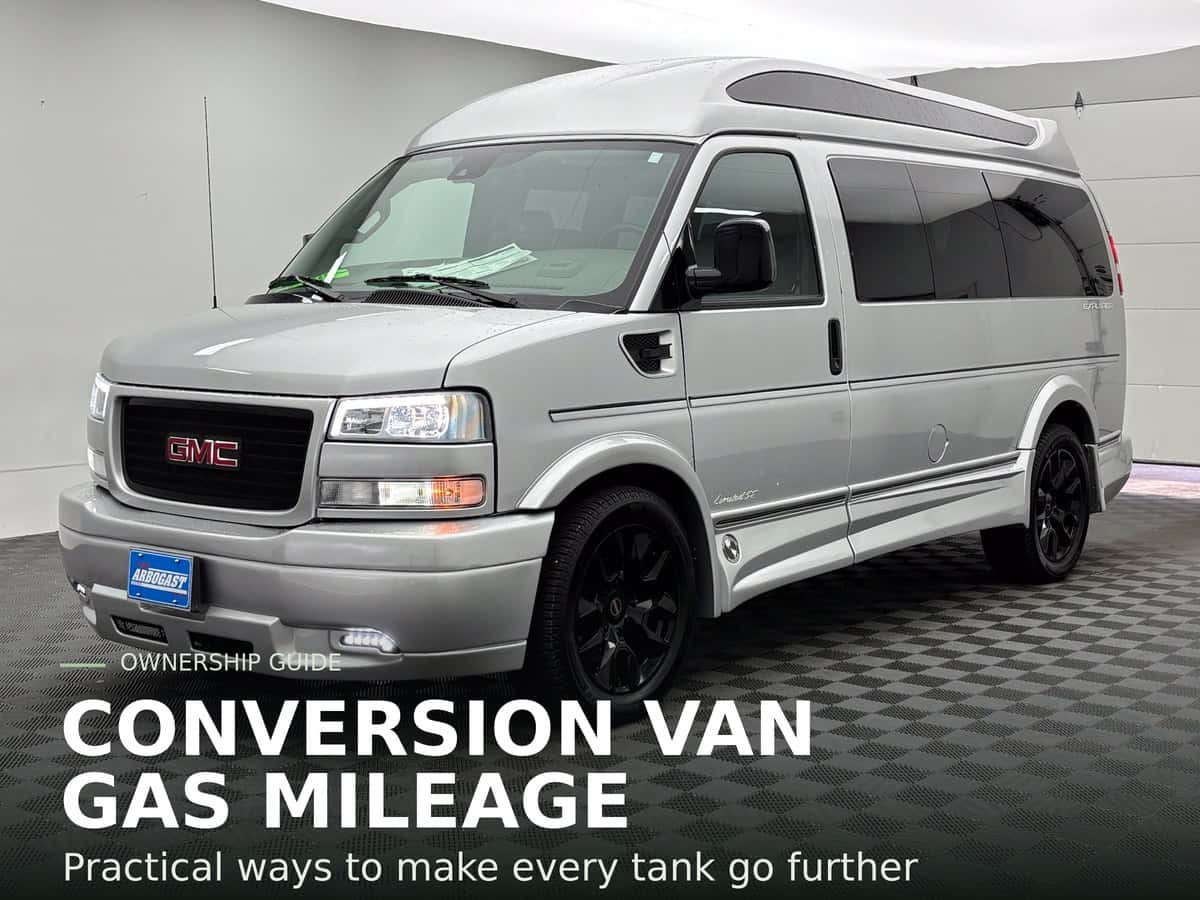
Conversion vans are designed to carry passengers comfortably, provide room for luggage, and make long-distance travel more enjoyable. That versatility comes with a fuel-economy tradeoff compared with smaller passenger vehicles. However, driving habits, routine maintenance, and a few simple adjustments can help you get the most out of every tank of gas.
Quick Answer: How Can You Improve Conversion Van Gas Mileage?
The most practical ways to improve conversion van fuel economy include maintaining proper tire pressure, accelerating gradually, driving at consistent highway speeds, removing unnecessary cargo, keeping up with scheduled maintenance, and avoiding excessive idling. Actual fuel economy varies depending on the van’s engine, configuration, passenger load, driving conditions, and maintenance history.
1. Maintain Proper Tire Pressure
Tire pressure plays an important role in how efficiently a conversion van travels. Underinflated tires create additional rolling resistance, which means the engine has to work harder to keep the vehicle moving.
Check tire pressure regularly, especially before a long road trip or when temperatures change significantly. Always use the recommended pressure listed on the driver’s door placard or in the owner’s manual rather than the maximum pressure printed on the tire sidewall.
It is also worth checking tire condition and alignment. Uneven tire wear, improper alignment, or mechanical issues affecting the wheels can create additional resistance and reduce driving efficiency.
2. Use Smooth Driving Habits
Conversion vans are larger and heavier than many everyday passenger vehicles. Rapid acceleration and frequent hard braking can waste fuel, particularly in stop-and-go traffic.
Instead, allow the van to accelerate gradually and maintain a comfortable following distance. Looking farther ahead can help you anticipate traffic lights, slowdowns, and changing road conditions without unnecessary braking and acceleration.
Highway speed matters, too. Driving faster increases aerodynamic resistance, requiring more energy to maintain speed. Maintaining a consistent, reasonable speed within posted limits can help reduce fuel consumption during longer trips.
Cruise control can also help maintain a steady speed on relatively flat highways when road and traffic conditions allow. On steep or changing terrain, manual speed adjustments may be more appropriate.
3. Keep Up With Routine Maintenance
A properly maintained conversion van is better positioned to operate as intended. Skipping maintenance can allow relatively minor problems to develop into issues that affect performance, reliability, and fuel consumption.
Pay particular attention to these maintenance items:
- Engine oil: Follow the manufacturer’s recommended oil type and change intervals.
- Air filter: Have the engine air filter inspected and replaced when necessary.
- Spark plugs and ignition components: Follow the maintenance schedule for your particular engine.
- Tire alignment: Address uneven wear or signs that the vehicle is not tracking straight.
- Brakes: Have dragging brakes or unusual resistance inspected promptly.
- Engine warning lights: Investigate warning lights and changes in engine performance rather than ignoring them.
Maintenance requirements vary by model year, engine, and chassis. Your owner’s manual is the best reference for the correct service intervals.
If your conversion van needs attention, the Dave Arbogast Conversion Van Service Department can help with routine maintenance and vehicle service needs.
4. Remove Unnecessary Weight and Cargo
One advantage of a conversion van is its generous interior space. That extra room makes it easy to bring luggage, sports equipment, camping supplies, and other belongings along for the ride.
However, carrying unnecessary weight can reduce fuel economy. Take a few minutes to remove items that do not need to stay in the van between trips. Tools, equipment, storage containers, and other heavy belongings can add up over time.
Also consider exterior cargo accessories. Roof-mounted carriers and other equipment can increase wind resistance, particularly at highway speeds. Remove temporary cargo carriers when they are no longer needed.
There is no need to sacrifice the passenger comfort or storage space that makes a conversion van useful. The goal is simply to avoid carrying unnecessary weight and equipment.
5. Plan Trips and Avoid Excessive Idling
Frequent short trips can be less efficient than longer drives. When an engine is cold, it generally uses more fuel until it reaches normal operating temperature. Repeatedly starting the van for short errands can therefore increase overall fuel consumption.
Whenever practical, combine errands into one trip. This reduces repeated cold starts and can help you spend less time driving overall.
Avoid letting the engine idle unnecessarily while parked. Whether you are waiting in a parking lot or sitting outside a destination, prolonged idling consumes fuel without moving the vehicle any closer to where you need to go.
For longer road trips, planning your route ahead of time can also help reduce unnecessary detours, traffic delays, and stop-and-go driving.
6. Understand How Weather and Driving Conditions Affect MPG
Even when a conversion van is properly maintained, fuel economy can change throughout the year. Cold temperatures, strong headwinds, hilly roads, heavy traffic, and frequent stops can all affect how much fuel the vehicle uses.
Winter driving can be particularly challenging. Engines take longer to reach their normal operating temperature, and winter fuel formulations can also affect mileage. Snow-covered roads and additional accessory use may contribute to the difference.
Air conditioning can also increase engine load. There is no need to avoid using climate control when passenger comfort requires it, but understanding that accessory use affects fuel consumption helps explain why mileage may change between trips.
Rather than expecting identical fuel economy on every drive, consider the conditions under which you normally use your van. A long highway trip in mild weather will not necessarily produce the same results as a fully loaded van traveling through winter traffic.
7. Track Your Actual Fuel Economy
If you want to understand how efficiently your conversion van operates, tracking fuel economy over several fill-ups is more useful than relying on a single trip or dashboard estimate.
You can calculate your average miles per gallon with a simple formula:
Fuel Economy Formula
Miles Driven ÷ Gallons Used = MPG
For example, if you travel 300 miles and use 25 gallons of fuel, your average is 12 miles per gallon.
For a more reliable comparison, use the same fill-up method over multiple tanks and record the odometer reading and gallons purchased. This helps account for differences in driving conditions and fuel-pump shutoff.
You can also estimate your annual fuel budget using your actual average MPG:
Annual miles driven ÷ average MPG × price per gallon = estimated annual fuel expense.
This gives you a more useful ownership-cost estimate than relying on a generic fuel-economy figure that may not reflect your particular van or driving habits.
Frequently Asked Questions About Conversion Van Gas Mileage
What affects conversion van gas mileage the most?
Engine configuration, vehicle weight, speed, driving habits, tire pressure, weather, and maintenance condition all influence fuel economy. The combination of these factors determines what a particular conversion van achieves in everyday driving.
Does a fully loaded conversion van use more gas?
Generally, yes. Carrying additional passengers, luggage, and equipment increases the weight the vehicle must move. Removing unnecessary cargo can help reduce fuel consumption while keeping the equipment and belongings you actually need.
Does highway driving improve conversion van fuel economy?
Steady highway driving can be more efficient than repeated stop-and-go city driving. However, excessive highway speeds increase aerodynamic resistance and can reduce fuel economy. Actual results depend on the vehicle and driving conditions.
Improving conversion van gas mileage is largely about understanding how your vehicle is used and keeping it in good operating condition. Consistent maintenance, sensible driving habits, and thoughtful trip planning can help you get more out of every tank while continuing to enjoy the comfort and versatility of your van.
If you are shopping for your next conversion van, explore our selection of used conversion vans and Explorer Conversion Vans. Our team can help you compare available configurations and find a van that fits your passengers, travel plans, and ownership priorities.

0 comment(s) so far on How to Improve Your Conversion Van’s Gas Mileage